Big Changes Are Coming to the Department of Fair Employment and Housing

Capitol.jpgThe way complaints for violation of the Fair Employment and Housing Act (“FEHA”) are processed and enforced by the Department of Fair Employment and Housing (“DFEH”) is about to undergo a significant transformation.  Motivated by a desire to close a nearly $16 billion budget deficit by reducing duplication and maximizing efficiency within State government, Governor Brown signed SB 1038 which eliminates the Fair Employment and Housing Commission.  The Commission is a quasi-judicial administrative agency that is currently responsible for administrative adjudication of FEHA complaints.  The Commission also conducts mediations, engages in rulemaking, and provides public information and training.

As a result of the elimination of the Commission, a new arm of the DFEH, the Fair Employment and Housing Council, will handle aspects relating to rulemaking and holding public hearings on civil rights issues that were formerly administered by the Commission.  In addition, the DFEH will now have the power to directly file complaints against employers in civil courts for FEHA violations. 

Here is how the DFEH processes FEHA complaints under the current and new law.

Under the current law an aggrieved employee can choose to have the DFEH investigate a FEHA complaint on his or her behalf or request a “Right-to-Sue” letter in order to allow the employee to immediately sue the employer in court.  If the DFEH investigates and finds that there is violation under FEHA, then the DFEH can file an accusation with Commission to which the employer has 90 days to respond.  During this time, voluntary mediation services are offered for purposes of settlement negotiations.  If the case is not settled, then the case is prosecuted before an Administrative Law Judge of the Commission.  However, where emotional distress damages or administrative fines are being sought, the employer may elect to have the case removed to civil court.

Under the new law which goes into effect on January 1, 2013, the DFEH will now be able to file lawsuits directly with the court instead of having the claims adjudicated by the Commission.  However, before filing a lawsuit, the DFEH will now require all parties to undergo mandatory dispute resolution free of charge in the DFEH’s Internal Dispute Resolution Division.  As discussed above, mediation is currently a voluntary process.  If the DFEH’s lawsuit is successful, the new law also authorizes courts to award the DFEH reasonable attorney fees and costs including expert witness fees.  The DFEH will continue to offer pre-investigation voluntary mediation.

It is unclear at this time if these changes will affect the processing of FEHA complaints or spawn a spike in DFEH driven lawsuits in the courts.  Consequently, all of our followers are encouraged to stay tuned to the blog for any updates in this evolving area.      

When Parents Behave Poorly, Must Districts Still Engage In The Process? When "Stay Put" Does Not Mean "Freeze!"

This guest post was authored by Heather R. Coffman 

child holding lunch.JPGIn a recently published decision, Anchorage School District v. M.P., (9th Cir. 2012) ---F.3d --- [2012 WL 2927758], the Ninth Circuit Court of Appeals sent a cool message to school districts struggling to provide special education services to children with hyper-litigious parents: Parents’ poor behavior does not excuse the districts from providing annual Individualized Education Programs (“IEPs”) as required by the Individuals with Disabilities in Education Act (“IDEA”).  The court further held that despite a “stay put” order and parents’ refusal to participate in the process, a district failed to provide a Free Appropriate Public Education (“FAPE”) when it provided services to a third grade child pursuant to his most recently approved IEP, finalized when he was entering second grade. 

Zealous Advocates Turn Hyper-Litigious, Abandon the Collaborative Process 

In 2006, M.P. was a second grade student receiving special education and related services pursuant to an IEP to which his parents had consented.  M.P.’s parents had a history of filing due process complaints.  As their approach became more litigious, rather than collaborative, they refused to meet with the district to update M.P.’s IEP for the 2007-2008 year.  Instead, they filed yet another administrative complaint, which triggered a “stay put” order for M.P.’s writing instruction plan from the 2006 IEP.  Faced with parents who refused to participate in the IEP process, and a “stay put” order as to at least one provision in that IEP, the district froze all efforts to update the IEP, pending the outcome of related due process proceedings.  

Meanwhile, time marched on. M.P. completed the 2007-2008 third grade school year, and transferred schools (same district).  By agreement, he repeated the third grade curriculum at his new school for the 2008-2009 year.  However, M.P.’s parents refused to meet with the staff at his new school.  Left without other guidance, staff relied on the last IEP from 2006, in designing and implementing M.P.’s educational plan for his 2008-2009 school year as a third grader.  The school used third grade curriculum materials.  M.P.’s parents filed another due process complaint, alleging that M.P. did not receive educational benefits when the district applied his 2006 second grade IEP in 2008 as a third grade student.   

Ninth Circuit: Districts Should Keep Trying or File Their Own Complaint 

The Ninth Circuit held that even where, as here, the student’s parents thwarted the IEP’s intended collaborative process, the school district bore the burden to review and revise M.P.’s IEP on an annual basis.  Given the parents’ refusal in this case to participate in an IEP meeting to update the expired 2006 Program, the Court would have had the district either keep trying to develop a mutually agreeable IEP, or file its own administrative complaint for approval of a district-proposed IEP.  

Moreover, the court found that the “stay put” order for M.P.’s writing development did not allow, let alone force, the district to place all revisions to the IEP on hold pending the outcome of the litigation. The court held that “updating an eligible student’s present level of academic achievement and functional performance and establishing corresponding goals and objectives does not qualify as a change to a student’s educational placement, so long as such revisions do not involve changes to the academic setting in which instruction is provided or constitute significant changes in the student’s educational program.”  

The Court then opted to make the factual determination that the school district denied the student a FAPE because “an IEP developed for a second grader is not reasonably calculated to ensure educational benefits to that student in his third grade year.” 

Finally, the Court found the District Court abused its discretion in denying the parents reimbursement for the private tutoring they provided to their son.  

Where Do We Go From Here? 

If read expansively, this decision could place an onerous burden on school districts when parents refuse to participate in good faith in the IEP process. Districts are faced with the unpalatable choice of engaging in drawn-out attempts to discern and address parents’ demands (which may be unreasonable and/or ill advised), or of initiating  due process–both of which are  costly and time-intensive processes that divert precious resources from actually educating and supporting the child at issue. 

Ultimately, this case should serve as a cautionary tale for districts, but should not be treated as a clear statement of law applicable in all settings.  Case law remains unsettled regarding the impact of parent conduct on school districts’ liability in providing special education services.  However, the Ninth Circuit went out of its way to publish this decision (which was initially a memorandum decision with limited precedential value).  The take-away, then, as in most of these thorny situations, is two fold: 

  1. Always remember that the child is the client, not the parent, and do your best to proceed accordingly; 
  2. When parents impede your ability to serve the child, proceed with extreme caution, and seek legal counsel as early in the process as possible, to prepare the best plan of action under admittedly difficult circumstances.  

Appellate Law -- What Are Amicus Curiae Briefs?

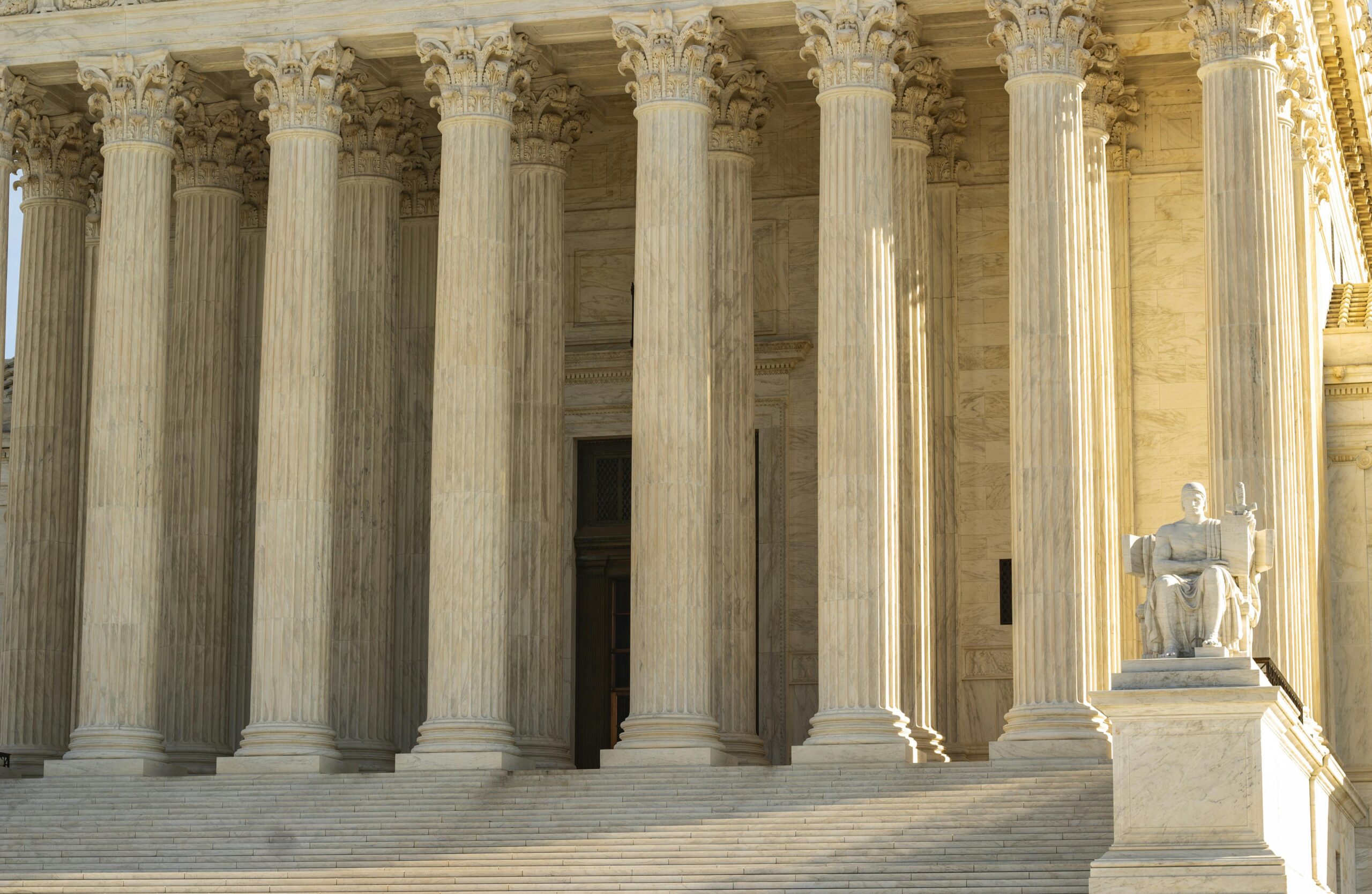
US Supreme Court_2.jpgPublic agency officials and employees may read newspaper articles about recently decided landmark cases in public sector labor and employment law, and may feel relief, anger, surprise, or vindication in the result.  This is especially true if the decision impacts how the agency functions on a day-to-day basis.  These same individuals may also find developing U.S. Supreme Court and California Supreme Court decisions important and interesting enough to want to join the fight directly in a particular case, and try to persuade the Court which way a case should be decided.  Understandably, though, they would prefer not to do this if it meant their agency had to be a defendant in a lawsuit. 

There is a way organizations can join the fight on landmark cases without having actually to be a party, and that is by filing an amicus curiae brief with the Court. 

The brief of an amicus curiae (“friend of the court”) is submitted by a company, government agency, trade association, or other organization or individual who is not an actual party to the case but wishes to contribute argument or general information for the Court to consider.  Leave of Court is required to submit an amicus brief.  Although Courts usually grant such leave freely, they expect organizations seeking to file briefs to explain why they have an interest in the case’s outcome, and to explain what their brief can contribute that will help the Court decide.  Such briefs can be filed not only in the U.S. Supreme Court and state Supreme Courts, but in state and federal intermediate appellate courts.

Why would a lower level appellate court decision in a particular case, or even a Supreme Court decision, be important to an agency?  To understand this requires a short digression on the principle of precedent, something all lawyers learn in law school but rarely have occasion to explain in detail to clients.  Rules of precedent require courts to follow the prior decisions of higher courts.  In both state and federal courts, the decisions of trial courts (the first level of courts which conduct jury trials and bench trials, rule on requests for writs, and conduct other proceedings) are not precedential.  Their decisions affect the parties only, and although for example a large jury verdict or an injunction may send a “signal” to an industry, the outcome does not control anyone except the parties.  A Court of Appeal decision designated for publication, however, is controlling on all trial courts in the state.  Thus, if the Court of Appeal holds that individual supervisors can be held personally liable under the Fair Employment and Housing Act (“FEHA”) for retaliation, then every trial court in the state has to follow that holding and has to take that position in every case. 

The losing party may, a short time after the appellate case is decided, ask the California Supreme Court to review the case.  The Supreme Court picks and chooses the cases it takes, and does so with an eye toward shaping California law.  If the Supreme Court decides to review the Court of Appeal decision in our example, and ultimately reverses it, holding that supervisors cannot be personally liable, then every Court of Appeal as well as every trial court in California must follow this rule.  (The Supreme Court in fact rejected a rule of personal liability for retaliation in Jones v. Lodge at Torrey Pines, 42 Cal. 4th 1158 (2008), a case in which our firm participated in amicus briefing.) 

Federal courts work the same way.  The first level of the appellate courts, the one that can issue binding decisions in California, is called the United States Court of Appeals for the Ninth Circuit, which lawyers commonly call just the “Ninth Circuit.”  It covers other states as well, including Arizona, Nevada, Hawaii, and Alaska.  Other federal circuits cover different states, and at the top of all the “circuits” is the United States Supreme Court, which, like the California Supreme Court, picks and chooses the cases it takes, and issues decisions that control all the circuit courts and all the federal trial courts.  As you would expect, the California Supreme Court generally decides issues of state law, and the U.S. Supreme Court issues of federal law.

Thus, influencing how an appellate court decides a case can be important, and influencing how the U.S. Supreme Court or a state Supreme Court rules can be very important. 

What are the best arguments for amicus curiae briefs to make?  Generally, they are those that present the organizations’ unique perspective in a cogent light.  For example, in an employment case between an individual and a private company, neither side may think to brief the Court on how the Justices’ decision will affect the public sector, where employment laws can apply differently.  Briefing by public organizations can alert the Court to these issues, so that the Court’s holding can be phrased to avoid unintended problems in the public sector.  Briefs can also emphasize the impact of the case’s ruling on particular segments of the workforce, for example, police, fire, utilities, or educators.  Perhaps most importantly, the amicus brief can present practical, real-world examples from the sponsoring party’s industry, that show why as a public policy matter the Court should rule in a certain way, or at a minimum craft its ruling to avoid certain pitfalls.  

In addition, although it is a less traditional function, amicus briefs can join the legal debate directly by advancing unique and/or creative legal arguments the parties might not have presented.  It can develop one side’s legal case in an alterative way, or even in a more forceful way, if the party was reluctant to take certain approaches or positions.  (That said, counsel for the actual parties have often spent enormous time on the case, and may not have made certain arguments for tactical reasons.  It is best to coordinate with them in presenting arguments.)

What cases are coming up in which amicus curiae briefing is possible?  For the U.S. Supreme Court, there are two cases that the Court just decided to hear.  The first is Vance v. Ball State University, Case No. 11-556, in which the Court will decide whether Title VII’s definition of “supervisor” means only someone with power to take formal employment actions against an employee in question, or whether a broader definition applies.  A supervisor is someone whose unlawful harassment in violation of Title VII can render the employer vicariously liable.  Another case is Genesis HealthCare Corp. v. Symczyk, No. 11-1059, in which the Court will decide whether an employer can moot, and effectively end, a collective action under federal overtime laws by offering full relief to the named plaintiff, before he or she can persuade anyone else to join the class.  Two upcoming California Supreme Court employment law cases are Salas v. Sierra Chemical Co., No. S196568, and Wisdom v. Accentcare, Inc., No. S200128.  In Salas, the Court will decide the extent to which an employer sued for a violation of the FEHA can invoke as a defense the employee’s use of false documentation to obtain the job.  This defense is commonly referred to as the “after-acquired evidence doctrine.”  In Wisdom v. Accentcare, the Court will decide if an employer can hold a job applicant to a promise in an employment agreement to arbitrate disputes rather than go to Court.   (The deadline for amicus briefs has passed in this case, but the fact that oral argument will not occur until fall 2012 and the lack of any substantial amicus briefing may mean the Court may still accept amicus briefs).

As described above, intermediate appellate cases are important areas for amicus briefing as well.  What are a few rapidly developing areas of employment law to which amicus briefing could contribute at this level?  A partial list is the vested rights of public employees in retirement benefits (a very rapidly developing area), enforceability of arbitration agreements, cyber-bullying and the First Amendment rights of students, use and misuse of social media by public employees, anything regarding the scope of laws against harassment and discrimination, and increasingly the protections for concerted activity of individual non-unionized employees under labor relations statutes.  This is definitely a partial list, however.  In fact, any published case that has an important effect on public employers is worth consideration as a candidate for amicus briefing. 

What steps can an agency actually take?  Trade associations and leagues designed to benefit the agency can help.  The agency should be sure to consult lawyers with expertise not only in appellate law and preparation of amicus curiae briefs, but in the substantive area of law at issue – be it retirement, wage and hour, disability, employee free speech, privacy, or labor relations.   

Who Really Is A Supervisor Under Title VII?

Scales.jpg

This guest post was authored by Gurinder Grewal

Employers and employees often struggle to determine who really is a supervisor in a workplace.  Is it someone who can hire and fire workers?  Or can it be someone who gives out work assignments?  The United States Supreme Court granted certiorari on Monday to resolve this issue in the case of Vance v. Ball State University (Docket No. 11-556).  This means the Supreme Court will review this appellate court decision and resolve a split in the federal appellate courts over who is considered a supervisor under Title VII of the Civil Rights Act of 1964.

Plaintiff, Maetta Vance, is the only African-American employee working in her department at Ball State University.  She alleged that she was subject to racial epithets, references to the Ku Klux Klan, threats of physical harm, and other harassing conduct.  After the EEOC issued a right-to-sue letter to Vance, she filed an action in federal court alleging various federal and state discrimination claims.  The district court dismissed all of her claims, granting summary judgment in favor of the university.  Vance appealed only her hostile work environment and retaliation claims under Title VII of the Civil Rights Act of 1964 to the Seventh Circuit Court of Appeals.

The Seventh Circuit held that a supervisor for purposes of imputing liability to the employer for violation of Title VII is only an individual with the authority to hire, fire, demote, promote, transfer, or discipline an employee.  In other words, the Seventh Circuit was unwilling to extend supervisor status to persons who had authority to direct an employee’s daily activities but did not have authority to take formal employment actions in regards to the employee.  Because the persons alleged to be creating the hostile work environment were not supervisors under this standard, they were considered the coworkers of Vance.  Prior Supreme Court precedent establishes that employers are only liable for co-worker harassment under Title VII if the employer was negligent in discovering or remedying the harassment, and the university was not negligent in this case.  The Seventh Circuit also found that Vance failed to set forth sufficient evidence of retaliation.

The question that the Supreme Court will resolve is whether the supervisor liability rule established in prior Supreme Court precedent (i) applies to harassment by those whom the employer vests with authority to direct and oversee their victim’s daily work, (the holding of the Second, Fourth, and Ninth Circuits and the EEOC), or (ii) is limited to those harassers who have the power to “hire, fire, demote, promote, transfer, or discipline” their victim (the holding of the First, Seventh and Eighth Circuits.)

The Supreme Court’s decision will be significant for employers nationwide, as a definition of supervisor for Title VII purposes that includes persons who “direct and oversee” others includes far more persons than a definition that is limited to those persons with authority to take formal employment action.  However, the impact on California employers will be much less, since the California Fair Employment and Housing Act already broadly defines supervisors to include persons who have the “responsibility to direct” employees.

Anti-Slapp Motions As A Litigation Resource For Public Employers

couthouse-flag.JPGPublic employers in California have a powerful tool available to them in California’s anti-SLAPP statute, California Civil Procedure Code section 425.16.  This availability was confirmed in a recent case named Vargas v. City of Salinas.  Not much fanfare accompanied the Vargas decision, which issued last November.  But the Court of Appeal’s decision, on constitutional grounds, not to deny public employers access to this statute is significant. 

To understand why, let’s review what an anti-SLAPP motion is.  “SLAPP” stands for “strategic lawsuit against public participation.”  In general, SLAPP suits are understood to be lawsuits filed by a plaintiff to stifle a defendant’s exercise of free speech rights.  The term “strategic” more or less serves as a euphemism for “meritless.” SLAPP’s are considered bogus lawsuits designed only for the purpose of bludgeoning the defendant, and threatening those who wish to avoid being sued, into refraining from criticizing the plaintiff, or from making public statements contrary to the plaintiff’s interests.  Further, the common understanding is that a plaintiff who files a SLAPP knows that, even though it is meritless, it will take months if not years for a court or jury to make that determination.  By then, the defendant will have already been stigmatized by having a lawsuit pending for a considerable time, and been required to spend substantial attorney’s fees to dispose of it. 

California’s anti-SLAPP statute serves as a remedy by targeting these two harms caused by SLAPPS at an early time.  First, it remedies the lingering effect of the lawsuit by allowing the defendant at the very outset of the case to demand that the plaintiff present evidence showing that plaintiff has a “probability” of prevailing.  The court will dismiss the case if plaintiff cannot make this early showing.  Second, the statute alleviates the financial harm to the defendant by requiring plaintiff to pay the defendant’s attorneys’ fees if the case is in fact dismissed pursuant to the statute.  

If your agency is sued, how can you determine if the lawsuit can be disposed of early under the anti-SLAPP statute?  This will depend initially on whether the lawsuit arises from what the statute defines as protected activity (i.e., the first step of the anti-SLAPP statute’s test).  The fairly broad definition is as follows – a lawsuit will be covered if it arises from any of the following by the defendant: “(1) any written or oral statement or writing made before a legislative, executive, or judicial proceeding, or any other official proceeding authorized by law, (2) any written or oral statement or writing made in connection with an issue under consideration or review by a legislative, executive, or judicial body, or any other official proceeding authorized by law, (3) any written or oral statement or writing made in a place open to the public or a public forum in connection with an issue of public interest, or (4) any other conduct in furtherance of the exercise of the constitutional right of petition or the constitutional right of free speech in connection with a public issue or an issue of public interest.”  

Items (1) and (2) of this definition are of particular importance to public agencies.  They encompass within the scope of the anti-SLAPP statute statements before or in connection with any “official proceeding authorized by law,” regardless of whether the statements relate to a matter of public interest.  An “official proceeding” can include an administrative proceeding, and also an investigation by a public agency in preparation for initiating such a proceeding.  For example, in Vanginderen v. Cornell University, a federal court in California found that anti-SLAPP protection applied to the Cornell University Department of Public Safety's investigation into the plaintiff's involvement in alleged thefts, because the investigation was preparatory to the potential initiation of official proceedings against the plaintiff. 

Continue Reading

Court Rules Metrolink May Monitor Locomotive Engineers Via Audio/Video Surveillance

This guest post was authored by James E. Oldendorph Jr.

In October 2009, Metrolink installed two inward-facing cameras in all of its locomotive cabs.  While one of the inward-facing cameras records the control panel and gauges, the other is located seven to eight feet from where the locomotive engineer is seated inside the cab and captures a 270 degree span of the interior of the cab, including a view of the engineer.  There is also a forward-facing camera which does not capture any activities or sounds in the locomotive cab, but records video images of the rail right of way, tracks, and train signals.  Metrolink installed cameras and microphones in its locomotive cabs in the wake of the tragic Chatsworth railroad collision of September 12, 2008, involving a Metrolink train in which 25 people were killed and over 100 injured.  The National Transportation Safety Board determined that the collision was caused in part by an engineer using a cell phone to send text messages while operating the train.

On October 20, 2009, the union for a class of Metrolink locomotive engineers, and one individual engineer, sued seeking declaratory and injunctive relief against Metrolink and the removal of the cameras from the locomotive cabs.  The plaintiffs contended that the engineers had a reasonable expectation of privacy in the locomotive cabs, and that Metrolink's audio and video monitoring system violated the engineers’ procedural and substantive due process rights.  Plaintiffs also asserted that Metrolink’s actions were preempted by state law.

On June 1, 2011, Los Angeles County Superior Court Judge Luis A. Lavin granted Metrolink’s motion for summary judgment on all causes of action, finding that there were no issues of material fact warranting trial.  This ruling resulted in a victory for Metrolink on all claims and judgment in its favor.

Judge Lavin found that Metrolink’s camera policy and system did not violate the engineers’ constitutional right to procedural due process because they failed to establish that they were deprived of any life, liberty or property interest or of any statutorily conferred benefit, and failed to establish that the camera policy undermined their collective bargaining agreement with their employer, Amtrak.  Plaintiffs further could not show that Metrolink’s policy and system violated their substantive due process rights in that they failed to show any form of outrageous or egregious conduct constituting a true abuse of power on the part of Metrolink.  Additionally, Judge Lavin determined that Metrolink’s implementation of the camera policy reasonably related to a proper legislative goal of promoting safety on the railways.

Continue Reading

Bringing A Class Action Suit Against An Employer Just Got Harder

On June 20, 2011, the United States Supreme Court issued its opinion in the Wal-Mart Stores, Inc. v. Dukes.  The decision makes it much more difficult for very large groups of employees to join to sue an employer for alleged discrimination -- at least in federal court.  

Betty Dukes, a greeter at a Wal-Mart in Pittsburg, California alleged that Wal-Mart violated Title VII of the Civil Rights Act of 1964 by engaging in gender discrimination in both pay and promotions on a national basis.  In the lawsuit, Dukes sought to certify a class action consisting of approximately 1.5 million female employees who worked for Wal-Mart after December 26, 1998.  The issue before the Supreme Court was whether the plaintiffs satisfied the requirements for certifying a class action under Federal Rule of Civil Procedure 23 so as to proceed with one national gender discrimination case against Wal-Mart.  The Court did not address the merits of the case, i.e., whether Wal-Mart engaged in gender discrimination.

Despite the fact that Wal-Mart’s official written policy prohibited discrimination of any kind, Dukes alleged that Wal-Mart’s (1) corporate culture of stereotyping women, and (2) its policy allowing mid-level managers to make pay and promotion decisions (rather than having them made at a higher level) resulted in discrimination against women for many years.  Dukes alleged that these policies constituted discrimination under both disparate impact and disparate treatment theories. 

The district court made several findings justifying its decision to certify the employees as a class.  It found significant evidence of company-wide practices and policies that resulted in gender discrimination, including gender stereotyping, excessive subjectivity in personnel decisions and the maintenance of a strong corporate culture. The court also found statistical evidence that discrimination caused gender disparities and anecdotal evidence of bias.  The Ninth Circuit Court of Appeals upheld the district court’s decision to certify the employees as a class.

In its appeal to the United States Supreme Court, Wal-Mart challenged the certification of the case as a class action on the grounds that the claims of the putative class members were not common (i.e., a requirement to certify a group of individuals as a class).  To support its argument, Wal-Mart argued that its official policy strictly prohibited discrimination and that the plaintiffs’ evidence of an alleged pattern of disparate pay and promotions was too insignificant to establish a company-wide practice of gender discrimination.  Instead, Wal-Mart argued that since thousands of different supervisors and managers were delegated with authority to make decisions about pay and promotion, and since the plaintiffs’ own expert witnesses could not say what percentage of those decisions were “infected” by the alleged corporate culture of stereotyping women, plaintiffs’ evidence was insufficient to support class certification under Federal Rule of Civil Procedure 23. 

Justice Scalia, writing for the majority, agreed with Wal-Mart and ruled that the plaintiffs failed to satisfy Rule 23(a)’s commonality requirement.  Both the majority and the minority decisions also held that the district court and the Ninth Circuit improperly certified the class under Rule 23(b)(2) because the plaintiffs’ claim for back pay was not “incidental” to their request for injunctive and declaratory relief.

With respect to the commonality requirement, the majority held that there must be a common answer to a common question of law or fact -- not simply a common question of law or fact in the first instance.  In the employment law context, this means that a class action plaintiff must show that there is a common reason for the employment decisions at issue.  For example, if one person were responsible for making the thousands of pay or promotion decisions that the Dukes plaintiffs sought to certify, then there would be a common link to the adverse employment decisions – an alleged discriminatory decision maker.  But, where those decisions are made by thousands of different supervisors or managers considering a host of different variables, the majority held that the plaintiffs’ statistical evidence of disparate impact was too insignificant to create an inference of discrimination on a national, company-wide basis. 

Another significant aspect of the majority’s opinion is that class actions seeking monetary relief (as opposed to injunctive or declaratory relief) in all likelihood must proceed under Rule 23(b)(3), which has more procedural safeguards (e.g., a court must find that common questions of law or fact predominate, that a class action is superior to individual actions, mandatory notice and the right of a plaintiff to opt-out, etc.) than class actions certified under Rule 23(b)(2).  Justice Scalia, writing for the majority, also believed it was unacceptable to allow discrimination lawsuits to proceed as large class actions when monetary awards to plaintiffs would be based on a broad formula using something akin to representative sampling.  The majority held that an employer is entitled to individualized determinations of each employee’s eligibility for back pay, and Wal-Mart would be deprived of that right if the Ninth Circuit’s “Trial by Formula” plan were to be sanctioned. 

The bottom line is that this decision will be helpful to employers who are sued in federal court class action lawsuits for alleged discriminatory employment practices so long as the employer’s personnel decision makers are de-centralized.  Whether this decision will impact class actions brought in state court, however, remains an open question. 

Two Bar Associations Give Employers Another Reason To Adopt Social Media Guidelines

Social networking websites have become a treasure trove for lawyers looking for damaging information that could be used to impeach an opposing party or any adverse witnesses in a lawsuit.  As a result, the New York Bar Association’s Committee on Professional Ethics looked into the following question:

May a lawyer view and access the Facebook or MySpace pages of a party other than his or her client in pending litigation in order to secure information about that party for use in the lawsuit, including impeachment material, if the lawyer does not ‘friend’ the party and instead relies on public pages posted by the party that are accessible to all members in the network?

Gavel3.jpgThe New York Bar concluded that a lawyer may ethically access and view the public social network pages of another party in a pending lawsuit to search for potential impeachment material.  In reaching its conclusion, the New York Bar analogized accessing information on Facebook or MySpace to obtaining information from other publicly accessible online or print media, or through subscription services such as Nexis.  The New York Bar also distinguished its opinion from one issued by the Philadelphia Bar Association’s Professional Guidance Committee which looked at whether a lawyer may ethically “friend” an unrepresented adverse witness in a lawsuit to obtain potential impeachment information.

In the Philadelphia Bar’s opinion, a lawyer proposed asking a third party to “friend” the witness in order gain access to the witness’ private Facebook and MySpace pages by providing truthful information about him or herself.  However, the third party would conceal his or her relationship with the lawyer and the real purpose for “friending” the witness (to obtain impeachment information).  The Philadelphia Bar concluded that it would be unethical for the lawyer to engage in this sort of conduct under the Pennsylvania Rules of Professional Conduct which prohibits lawyers from making false statements and engaging in dishonest, fraudulent or deceitful conduct.  The New York Bar also reached the same conclusion.

The California State Bar has not yet issued an opinion on the propriety of lawyers accessing social networking websites.  However, it is likely the California Bar will agree with the opinions of the New York and Philadelphia Bars.  Further, California courts are already facing motions to exclude evidence found on the Internet.  Since it appears lawyers will continue to have the ability to scour social medial sources for impeachment material, the best advice is for employers to develop social media guidelines.  Employers should also provide training to all employees on the impact their social media activities may have on potential or pending litigation.

LCW provides sample social media policies and guidelines in our Privacy Issues in the Workplace workbook for public agencies.  Additionally, LCW’s “Caught in the Net” provides training on social media issues.

Overtime Pay For Off-Duty Cell Phone Calls And Text Messages? Maybe!

Person-Texting.png

The cell phone, in particular the so-called “smartphones” (e.g. iPhones, Blackberrys, Android phones) are amazing.  These devices allow us to be in contact no matter where we are on a 24/7 basis.  Some employers issue these devices to their employees both as a benefit to the employee but primarily as a benefit to the employer for the same reason: it allows contact at all hours of the day and night when necessary.

But when employees use these devices for work-related phone calls, text messages and emails while off-duty, should they be paid for this time?  This issue may be resolved in a case currently pending in the federal court in Illinois entitled Allen v. City of Chicago.

We normally do not report on a case pending in a trial court and certainly not about the ruling on a motion, which did not result in a judgment.  But this case seems of such particular significance that it merits a report.  Indeed, a number of other blogs have already commented on this case.

Here’s the situation.  The Chicago Police Department issued Blackberrys to a number of its officers including a Sergeant named Jeffrey Allen.  Sergeant Allen claims that he and other officers are required to use their Blackberrys to perform off-duty work including responding to telephone calls, emails, voicemails, and text messages.  Allen filed a purported class action lawsuit against the City alleging that he and other officers are entitled to overtime pay under the U.S. Fair Labor Standards Act for these phone based off-duty activities.  The City moved to dismiss the action but the trial court denied the motion and the matter will now proceed forward towards trial.

How this case will be resolved remains to be seen.  However, the novelty of this claim and the wide publicity the decision has received, may well result in a new cottage industry of FLSA litigation.

In order to minimize the likelihood of being the subject of such a case, the following steps are recommended:

  1. If possible, limit issuance of such devices to employees who are truly FLSA exempt and thus not entitled to overtime pay.
  2. If such phones must be issued to non-exempt hourly employees because of business necessity or operational demands, require employees to keep detailed time records of each phone related activity together with date, time of day, content description and actual duration of the call, email, text message, etc.  Be sure that the billings received from the service provider, such as AT&T, Verizon, etc., are maintained and reviewed and checked against the employee’s time reports for confirmation.  Keep in mind that FLSA requires the employer, not the employee, to keep accurate time records.  However, the employer can delegate that assignment to the employee as an additional part of their job.  Indeed, employees could be terminated for failure to keep accurate time records although they still must be paid because the employer receives the benefit of their services.
  3. If such phones must be issued to non-exempt hourly employees, limit their issuance to those who really do have a bona fide job related necessity to have them.  That is, only give phones to those hourly employees when their jobs truly require them to be available on an instantaneous basis even while off-duty.
  4. Some employees may need to have these phones while working but not while off-duty.  In these cases, issue a written policy prohibiting these employees from using their devices off-duty or institute a requirement that they reimburse the employer for personal use of the devices.  Another possibility is to require the employee to leave the phone at their job site, whereby they pick it up at the beginning of their work shift and leave it at the end.

The best advice is to develop a comprehensive written policy on the use of these devices so that employees are on clear notice of their entitlements and of their employer’s expectations of them.

LCW provides sample forms of Sample Electronic Communications Resources Policy and Authorization for Release of Information by Electronic Communications Service Provider in our Privacy Issues in the Workplace workbook for public agencies.  Additionally, LCW discusses the FLSA and strategies for complying with it in its Public Sector FLSA Compliance Guide workbook.

Keep visiting this website, as we shall update you on the progress of this case as it moves through the court system.

Photo Credit: Verizon Logo by methodshop.com, on Flickr

Details Do Count; FEHA Statute Of Limitations To Sue Begins When "Right To Sue" Letter Is Issued, Not When It Is Received

Gavel2.jpgLawyers are sometimes faulted for being overly detailed and “picky.”  Maybe so, but sometimes attention to detail can be important!  A good example is the recent court of appeal decision entitled Hall v. Goodwill Industries of Southern California, decided this past March 16, 2011.  In that case, Hall was terminated from his job at Goodwill and filed a complaint with the Department of Fair Employment and Housing (DFEH) which issued a “right to sue” letter on December 24, 2004.  Mr. Hall received the notice on December 31, one week later.  After filing his DFEH complaint he spoke with a co-worker’s attorney but did not immediately retain her.  Many months later, he did retain the attorney to represent him in litigation against Goodwill and the lawsuit was filed December 30, 2005, six days after the one-year anniversary of the issuance of the right to sue letter but one day prior to the one-year anniversary of his receipt of the notice.

Goodwill filed a motion for summary judgment alleging that the lawsuit was filed too late.  Government Code section 12965(b) provides that a lawsuit must be filed “within one year from the date” of the right to sue letter.  The trial court denied the motion and Goodwill took the matter up on appeal and prevailed.  The court of appeal held that the clear language of section 12965(b) dictates a legislative intent that the act triggering the statute of limitations is the issuance of the right to sue letter, not its receipt by the complainant.  The court noted that earlier language of the statute, did key the running of the limitations period to the date of receipt.  However, the statute had been changed by the legislature to include the current language, making it clear to the court that the legislature intended the triggering event to be the issuance date, not the receipt date.

The appellate court contrasted the California statute with the language of Title VII of the 1964 U.S. Civil Rights Act, which clearly provides that the time to file a lawsuit after receipt of a notice from the Equal Employment Opportunity Commission (EEOC) runs from the date of the employee’s receipt, not from the date of the letter’s issuance by the EEOC.

Years ago, while still a young attorney, I learned from a more senior practitioner that one should never forget to check small details like this as they may provide an early and quick basis to dispose of a claim.  Such was the case here.  Mr. Hall’s delinquent filing of his lawsuit, while only six days too late, was enough to doom his lawsuit.  The court of appeal directed that the lawsuit be dismissed for having been untimely filed.

The Litigation Landscape In An E-Discovery World

flash-drive.jpgThe “e-discovery” amendments to the Federal Rules of Civil Procedure were implemented in December 2006.  In 2009, California enacted similar “e-discovery” rules.  The adoption of these rules has greatly impacted the landscape for entities that find themselves in litigation in state or federal court.  There is an issue, for example, about the retention of documents that are stored in hard form and electronically.

The federal and state e-discovery rules are predicated in large part on the decision in Zubulake v. UBS Warburg LLC, a case which dealt with a litigant’s duty to preserve and produce documents and electronically stored information (“ESI”).  ESI comes in many forms.  It includes e-mail, voicemail, text messages, word processing documents, spreadsheets, websites, etc.  The duty to preserve ESI obligates a party who knows of actual or probable litigation not to destroy discoverable ESI or places where ESI is stored (e.g., hard drives, flash drives, servers, back-up tapes, etc.)  A party to a lawsuit cannot satisfy its e-discovery obligations simply by printing out hard copies of e-mails or other documents since electronic data (e.g., “metadata”) underlying an electronic document is often just as relevant as the document itself.  “Metadata” is the electronic data that can identify when a document was created, who created it, what changes or modifications to a document were made, who made those changes, when they were made, etc.

As explained in Zubulake, “anyone who anticipates being a party or is a party to a lawsuit must not destroy unique, relevant evidence that might be useful to an adversary.  While a litigant is under no duty to keep or retain every document in its possession…it is under a duty to preserve what it knows, or reasonably should know, is relevant in the action, is reasonably calculated to lead to the discovery of admissible evidence, is reasonably likely to be requested during discovery and/or is the subject of a pending discovery request.”

As for the scope of evidence and ESI that must be preserved, the Zubulake court observed, “[t]he broad contours of the duty to preserve are relatively clear.  That duty should certainly extend to any documents or tangible things . . . made by individuals ‘likely to have discoverable information that the disclosing party may use to support its claims or defenses.’  The duty also includes documents prepared for those individuals, to the extent those documents can be readily identified (e.g., the “from” and “to” fields in e-mails).  The duty also extends to information that is relevant to the claims or defenses of any party, or which is ‘relevant to the subject matter involved in the action.’  Thus, the duty to preserve extends to those employees likely to have relevant information – that is, the ‘key players’ in the case.”

Agencies should have a document retention policy in place that addresses retention of ESI.  Plus, we generally recommend that, if your agency is sued, you: (1) work with your legal counsel to develop a preservation plan related to the lawsuit; (2) immediately suspend the scheduled destruction of all documents that relate to a plaintiff’s claims (if any), and (3) preserve all ESI relating to plaintiff’s claims.

Formulating Effective College Freedom Of Expression Policies Under The First Amendment

students-on-campus.JPGMany public universities and colleges in California want to establish policies regarding what kind of speech can occur on campus.  But doing so can be hazardous.  Imagine you are tasked with establishing a policy that governs organized student speech on your campus.  What would be reasonable?

Without a lot of legal guidance, you might propose the following: being careful, you might say, “none of the campus is considered any kind of ‘public forum’ for speech activities.”  But, to be generous, you might also say, “all of the walkways surrounding the school library will be considered a free speech zone for students and outsiders.”  The area is not heavily trafficked, and makes up only a small portion of the campus, but you expect that at least some students and other passersby will be able to see demonstrations or activities in the area specified.  Again being generous, you write, “student organizations and outside groups must apply to use the free speech zone for demonstrations or distributing literature, and the college guarantees it will respond to the applications in fifteen (15) days, and will only deny permission for a proposed demonstration if it is manifestly inappropriate for an academic environment as determined by the Chancellor or by his or her designees.” 

This campus policy doesn’t sound crazy.  And it certainly does not create a police state or Orwellian dystopia.  After all, it permits even demonstrations that criticize the college or its policies, since most people would agree such demonstrations would not, if reasonable, qualify as "manifestly inappropriate for an academic environment." 

Continue Reading